How pool painting differs from resurfacing
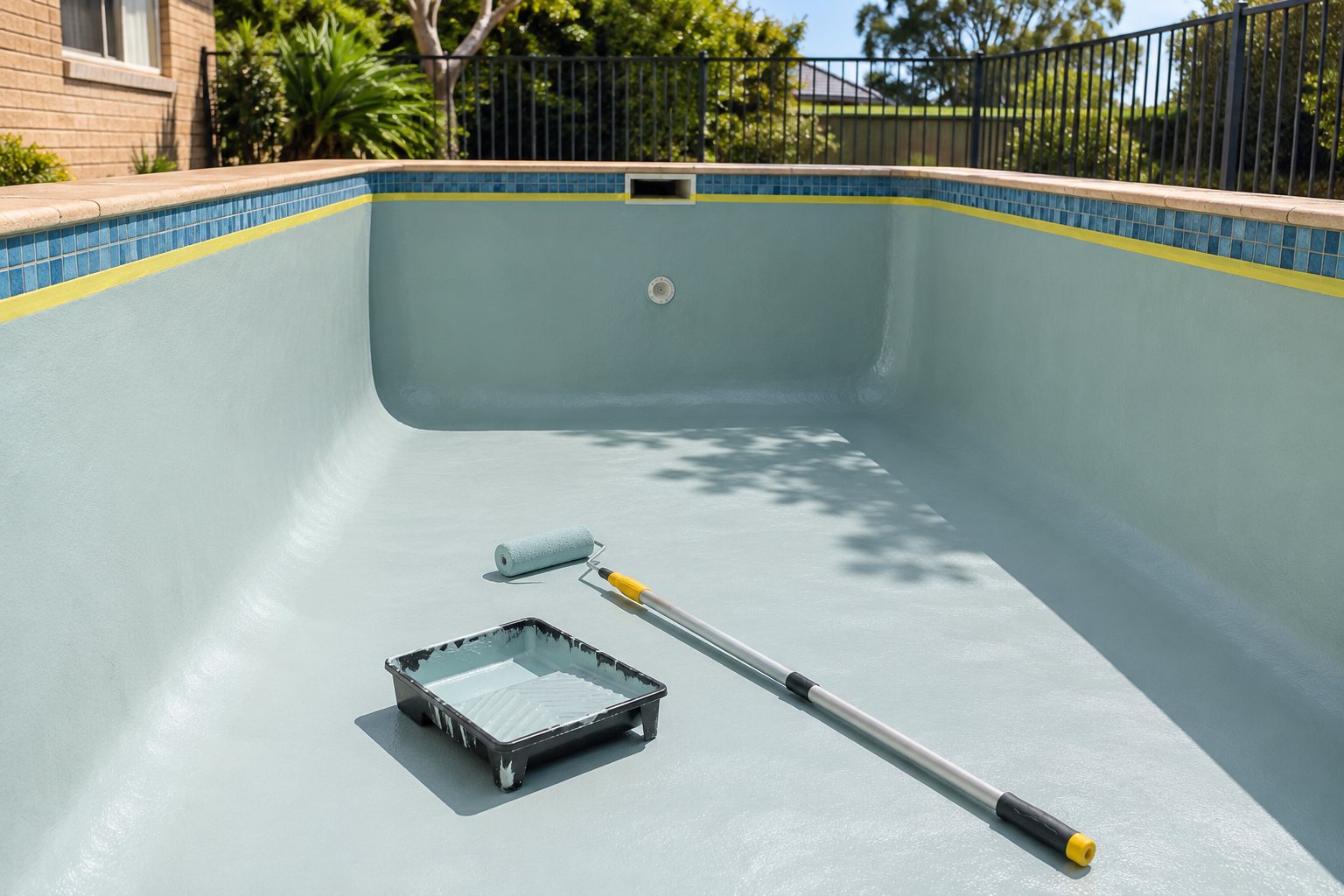
Pool painting in Coffs Harbour means applying a coating over the existing pool surface rather than replacing it. The coatings sold for this are chlorinated rubber paints, acrylic coatings and two-pack epoxy, and each product has its own limits on weather, drying and filling. That makes the data sheet more important than the label on the tin. This page compares what the data sheets say and what to ask. We are a referral service: we pass your enquiry to a local pool contractor, who carries out the work.
A coating is a different product class from a cement resurface, and usually a different job: the shell is sound and the aim is to refresh the surface. A 2014 trade magazine article, whose publisher country is inferred, says pool paints are non-structural and unsuitable for cracked or leaking pools. If the surface is hollow, cracked or leaking, a coating is not an answer on its own. The pebblecrete and quartz page covers the alternative for concrete pools, and fibreglass recoating covers the other shell type.
What the data sheets say about weather, drying and fill times
Every entry below comes from one data sheet or guide for one product type. None applies to coatings in general, so ask for the sheet that matches the product proposed.
| Product type | Application limits | Surface, rain and recoat | Cure and fill |
|---|---|---|---|
| One epoxy guide for Marblesheen and Quartzon surfaces | Not below 10 C or above 30 C; apply in spring, summer or autumn. | Surface moisture below 5 per cent; at least three consecutive rain-free days; 20 to 24 hours between coats. | Dry at least 10 days in summer or 14 days in winter before filling. |
| One epoxy guide for pebblecrete | Not below 10 C or above 30 C; apply in spring, summer or autumn. | Moisture below 5 per cent, checked with a hygrometer or plastic sheet test; three rain-free days. | At least 7 days in summer or 14 in winter before filling. This differs from the first guide. |
| One chlorinated rubber data sheet | Minimum film-forming temperature of 10 C. | Recoat in 2 to 4 hours, with drying times given at 25 C. | Seven days full cure before filling. Not suitable over existing epoxy or fibreglass. Flammable. |
| A second chlorinated rubber sheet, from a New Zealand maker | No temperature range stated. Avoid humidity of 85 per cent or above, and rain or a sudden temperature drop in the first 12 hours. | Clean, sound and fully dry; at least 16 hours between coats. | At least 7 days before filling. Not suitable for heated, salt water or spa pools. |
| One acrylic coating sheet, from a New Zealand maker | Do not apply if air or surface temperature is likely to fall below 10 C. | Surface must be dry to avoid blistering; recoat after at least 4 hours at 20 C. | Full cure in 7 days; fill after at least 7 days. Salt pools not mentioned. |
| One epoxy pool coating sheet | Hardener grades for 13 to 20 C and 20 to 30 C; do not apply when air is below 15 C; minimum surface 13 C. | Porous surfaces need a sealer first; recoat after at least 10 to 12 hours at 20 to 25 C. | Full cure in 7 days. Suitable for swimming and spa pools below 40 C. Salt not mentioned. |
Coat counts and film thickness differ as well. One epoxy guide asks for at least two coats to a minimum dry film thickness of 400 microns. One epoxy sheet asks for at least two coats at 150 microns per coat, with three on steps and ledges. One chlorinated rubber sheet asks for two coats of at least 90 microns each. The full documents are the Marblesheen and Quartzon guide, the pebblecrete guide, the first chlorinated rubber sheet, the second chlorinated rubber sheet, the acrylic sheet and the epoxy sheet. Fill times are only touched on here. The timing guide covers them.
Coffs Harbour winters against those limits
In July the Bureau of Meteorology records mean minimum temperatures of 7.9 C at the Coffs Harbour Airport station (record 2013 to 2026, a short record) and 7.6 C at the Coffs Harbour MO station (record 1943 to 2015, now closed). Several sheets in the table set minimums of 10 C, 13 C or 15 C. A mean minimum is an overnight figure and daytime temperatures are higher, so this is only our reading of the numbers: a winter job sits close to some sheets' limits, and the contractor has to check air and surface temperature on the day against the sheet for the product. It is not a local rule.
Rain matters too, because several sheets ask for rain-free days. The Airport station records a mean of 112.6 days a year with 1 mm or more of rain, again from a short record. Some sheets also set longer fill delays in winter, so ask the contractor how the product's limits will be checked and what happens if the weather turns.
Cracks, leaks and what a coating cannot do
The acrylic sheet and the epoxy sheet both say their coatings do not bridge moving cracks or joints. The first chlorinated rubber sheet says structural cracks over 3 mm and leaks need professional assistance. A coating is a finish, not a repair, so ask how cracks will be assessed and treated before any coating goes on. The causes are covered in why pool surfaces fail.
Salt water, chemistry and fumes
Salt compatibility is product-specific. The second chlorinated rubber sheet says it is not suitable for heated, salt water or spa pools. One epoxy care guide allows salt after the initial filtering. The other sheets do not mention salt. The same epoxy care guide says low alkalinity is likely to cause early coating degradation. Targets differ by product, so this site gives none: follow the sheet for the product used. The data sheets describe solvent-based products such as the chlorinated rubber paints as flammable and needing ventilation, so ask for the safety data sheet for whatever product is proposed and how the work area is ventilated.
Licence or certificate
The NSW swimming pool repairs and servicing page lists "painting and surfacing (rendering or applying surface coatings) of a swimming pool" and says a licence or certificate is needed for that category. Check the contractor's licence category and expiry on the NSW licence check, and ask Building Commission NSW on 13 27 00 if you are unsure. The licence, contract and warranty page sets out what the NSW pages do and do not say.
What this page cannot do
It cannot tell you which coating suits your pool, because the data sheets cover six products and none applies to the rest. It cannot say what the weather will allow on the day, how long a coating will hold up, whether your pool is salt compatible, or which licence category a particular job needs. It cannot see your pool, so it cannot say whether the surface is sound enough to coat. Ask the contractor for the data sheet, the written start-up instructions and the warranty terms.
Check the current rules before you rely on this
This page describes pool paint and epoxy coatings, what several data sheets say about weather and fill times, and where the NSW licence wording fits. It describes the rules in general terms as they stood in November 2026. Standards, forms, thresholds and fines change.
The authoritative sources are NSW Government, swimming pool repairs and servicing work (licence page), Luxapool, epoxy pool coating application guide for Marblesheen and Quartzon surfaces (VER1601), Nutech Paint, NuPool chlorinated rubber pool paint technical data sheet, APCO Coatings, Poolkote chlorinated rubber pool paint product data sheet (2017), Bureau of Meteorology climate statistics, Coffs Harbour Airport (record 2013 to 2026) and Bureau of Meteorology climate statistics, Coffs Harbour MO (record 1943 to 2015, closed). Where anything here differs from those sources, they are right and we are not.
We are not pool contractors, builders, regulators or lawyers. For what applies to your job, ask the contractor which licence or certificate they hold and check it on the NSW licence check, then ask Building Commission NSW (13 27 00). Ask Coffs Harbour City Council about emptying the pool, registration and the pool barrier, and SafeWork NSW about dust and chemicals.
Accurate at the time of writing, November 2026. Always check the source before relying on it.