What pool replastering and render finishes are
Pool replastering in Coffs Harbour means preparing a worn cement finish and applying a new plaster or render coat to the shell. Trade sources describe plaster as cement mixed with sand, limestone or marble aggregate, and water. This page covers when that finish is used, how it differs from the alternatives and what to ask. We are a referral service: we pass your enquiry to a local pool contractor, who carries out the work.
A coating maker's guide names Marblesheen and Quartzon as surfaces and says their quality "varies widely" with raw materials, application technique, additives and deterioration, as set out in its application guide. This site found no neutral definition of either name, so it does not say what they are. Ask the contractor which product is meant and for its data sheet.
When a pool is replastered
The reasons are the surface signs described in the signs guide: a rough or chalky surface, stains that will not clean, cracks, and areas that sound hollow when tapped. A hollow area is one where the finish has separated from the shell. A crack or hollow patch can mean more than a surface problem and can signal a leak, so ask for it to be assessed before a new coat goes over it. The sensible question is not only whether to replaster but whether the shell under the plaster is sound. The reasons surfaces fail are in why pool surfaces fail.
| Finish | What sources say it is | Read more |
|---|---|---|
| Plaster or render | A cement coat on the shell, with sand or marble aggregate. | This page. |
| Pebble or quartz | Plaster with added aggregate, with the aggregate exposed. | Pebblecrete and quartz |
| Paint or epoxy | A coating over the existing surface, with product-specific limits. | Painting and epoxy |
Preparation before new plaster
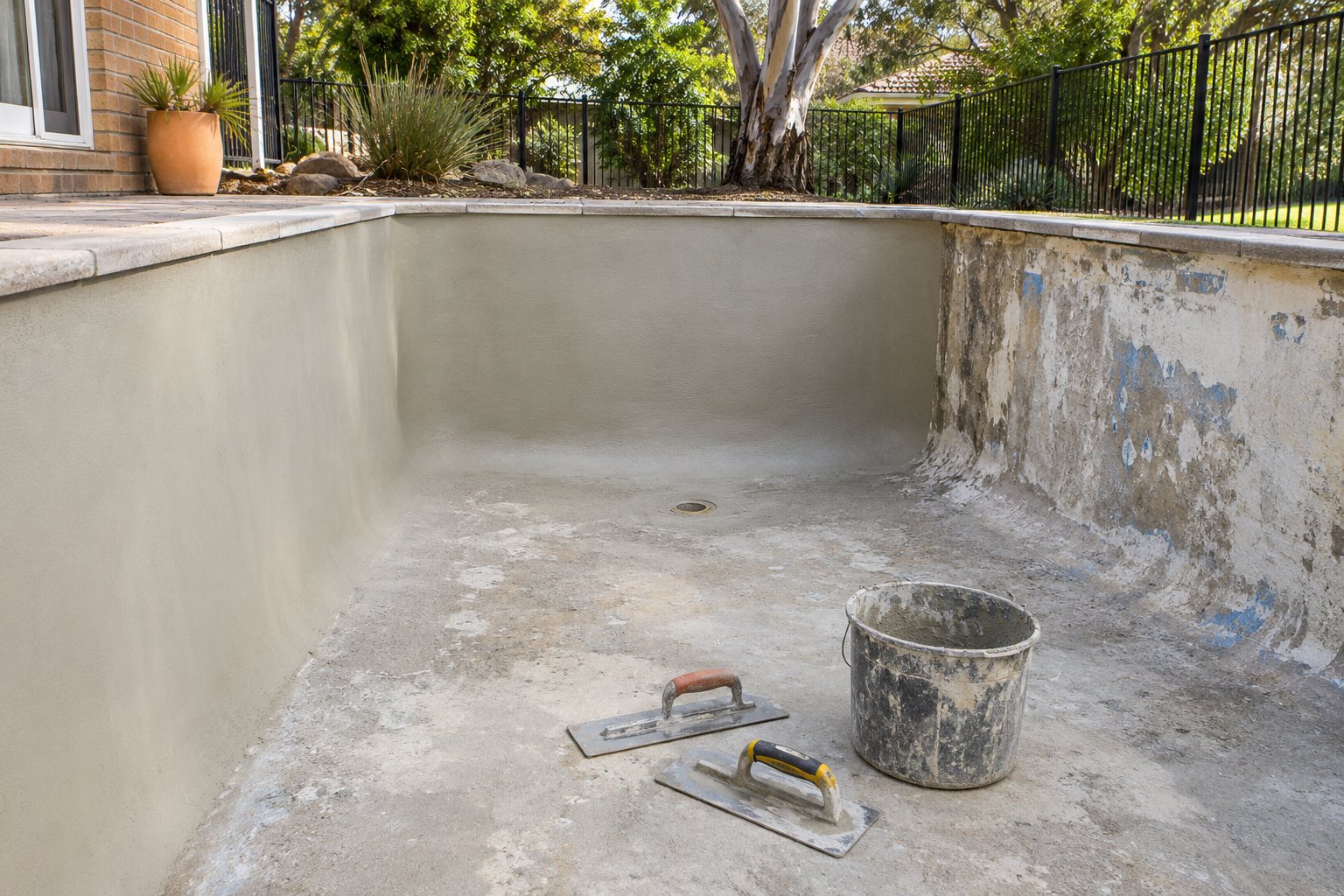
A 2017 trade magazine article says hollow areas must be removed and deep ones filled before re-plastering, and that leftover paint or fibreglass must be ground or sandblasted off before new plaster goes on. One South African pool quartz data sheet, for its own product, says to remove all existing plaster back to the original shell on old pools. A magazine for the accommodation trade lists scrubbing with a wire brush, using a chisel, pick or jackhammer where needed, removing chalky material, and acid and neutralising coats, as covered by its pool surfaces article.
Chipping and grinding make dust and slurry. Ask how dust is controlled and where slurry goes. The draining and dust page sets out what the sources say.
Start-up care after replastering
Start-up covers the first weeks after filling. Instructions differ by product, so this page gives no chemistry targets or swim dates. One plaster industry body's start-up page, whose country is not stated, says following its steps in order helps maintain the finish warranty. Brushing the surface and keeping automatic cleaners off it are common themes. One South African pool quartz data sheet says no automatic cleaner for three weeks, brush only, and that is that product's instruction, not a general one.
Follow the start-up instructions for the product used and ask for them in writing. The process and start-up page covers the stages, and the timing guide covers fill times.
Salt water and water chemistry
This site found no neutral Australian source on salt water and plaster wear, so it makes no claim either way. For coatings, salt compatibility is product-specific, and some data sheets are silent on it. Water chemistry targets differ so much between products and between plaster and coatings that this site publishes none. Tell the contractor if the pool runs on salt, and follow the maker's sheet for the product used.
Licence or certificate
The NSW swimming pool repairs and servicing page lists "painting and surfacing (rendering or applying surface coatings) of a swimming pool" and says a licence or certificate is needed for that category. The pages do not say how plaster, render, pebble or quartz are treated differently, so this site does not either. Check the contractor's licence category and expiry on the NSW licence check, and ask Building Commission NSW on 13 27 00 if you are unsure. See the licence, contract and warranty page.
What this page cannot do
It cannot tell you whether your pool needs replastering, because that depends on the shell and the surface, and it cannot give start-up chemistry or a swim date, because instructions differ by product and this site found no Australian maker figures for either. It cannot say what Marblesheen is, how salt water affects plaster, or which licence category replastering falls under. Ask the contractor for the data sheet, the written start-up instructions and the warranty terms, and ask for the licence or certificate held.
Check the current rules before you rely on this
This page describes pool plaster and render finishes, how a pool is prepared for them and where start-up instructions and the NSW licence wording fit. It describes the rules in general terms as they stood in November 2026. Standards, forms, thresholds and fines change.
The authoritative sources are NSW Government, swimming pool repairs and servicing work (licence page), Luxapool, epoxy pool coating application guide for Marblesheen and Quartzon surfaces (VER1601), Pool and Spa Marketing, best practices for completing concrete pool interiors (trade magazine, 2017, country inferred as Canada), AccomNews, pool surface options (trade magazine, undated) and Cemcrete, Pool Quartz data sheet (March 2026, product-specific). Where anything here differs from those sources, they are right and we are not.
We are not pool contractors, builders, regulators or lawyers. For what applies to your job, ask the contractor which licence or certificate they hold and check it on the NSW licence check, then ask Building Commission NSW (13 27 00). Ask Coffs Harbour City Council about emptying the pool, registration and the pool barrier, and SafeWork NSW about dust and chemicals.
Accurate at the time of writing, November 2026. Always check the source before relying on it.